Official Liceo Ilaria Alpi school logoState Language Secondary School
Ilaria Alpi · Cesena
European Union emblemCo-funded by
the European Union
ITEN

ERASMUS+ · JEAN MONNET ACTION

Learning about Europe.
Building
active citizenship.

EU-ACTIVE 2.0 takes Liceo Alpi students from learning about the European Union to informed and active participation.

Explore the four modules

Citizens Aware for Tomorrow’s Europe

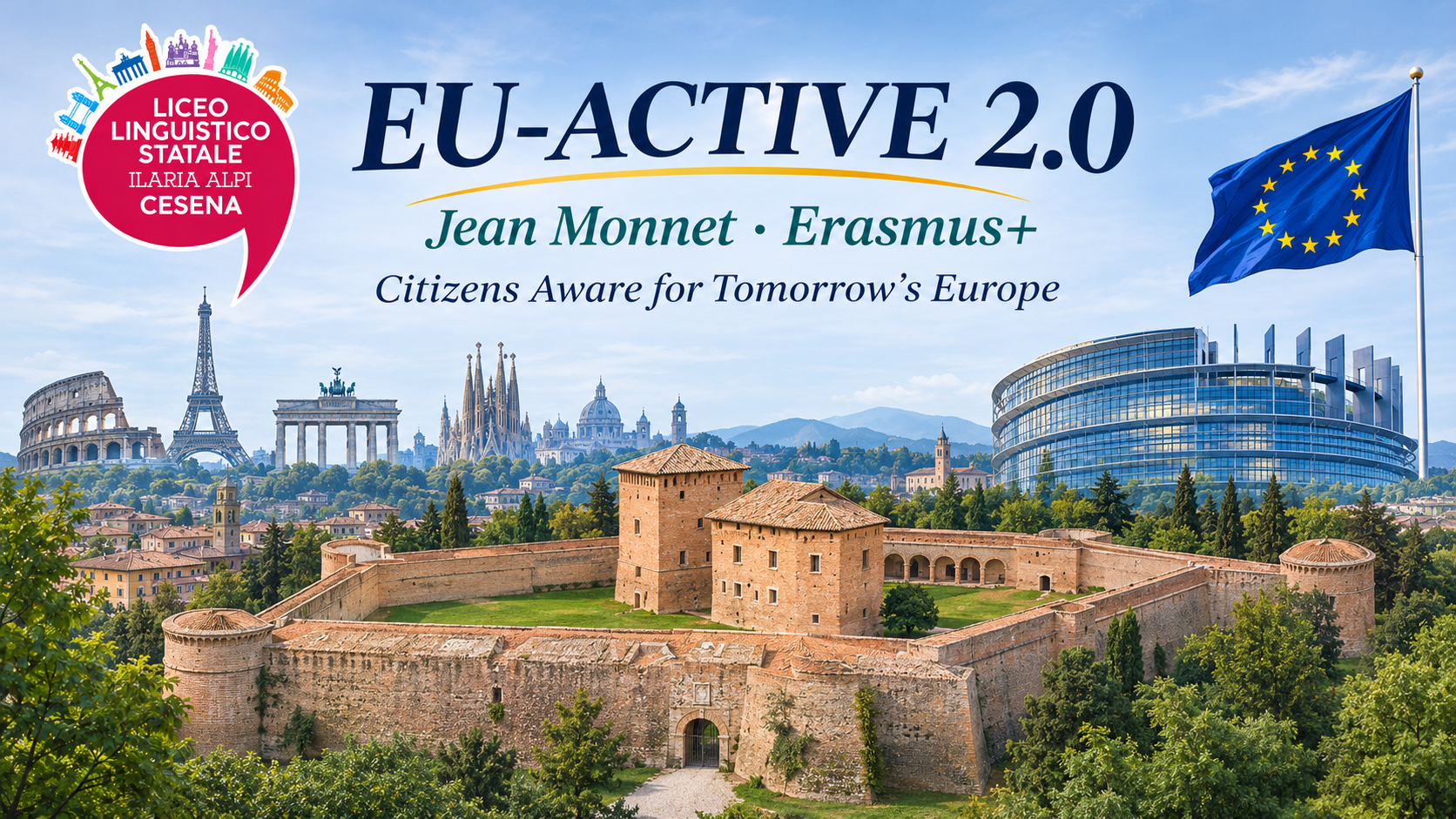
A panorama of European landmarks and Cesena’s Rocca Malatestiana, with the Liceo Alpi logo and EU-ACTIVE 2.0 · Jean Monnet · Erasmus+ title
One Europe, many voices. Citizenship in action.
2026–2029A three-year journey
211 hoursLearning activities over three years
4 modulesLearn, discuss, take action
10 classesJoining in 2026/2027
267 studentsTaking part in the first year

OUR EUROPEAN DIMENSION

Internationalisation
also means educating
active citizens.

Alongside mobility, exchanges and cooperation with partner schools, Liceo Alpi offers a learning journey to understand Europe and take part in it.

EU-ACTIVE 2.0: Citizens Aware for Tomorrow’s Europe is funded under Erasmus+, Jean Monnet – Learning EU Initiatives. It runs from 1 September 2026 to 31 August 2029 and is integrated into the school’s Civic Education curriculum.

Values and institutions, rights and opportunities, sustainability and digital citizenship become questions to explore, decisions to discuss and work to create together.

A PROGRESSIVE LEARNING JOURNEY

Four ways to
discover Europe.

Short lessons, workshops, simulations and peer discussion. Each module lasts five hours and produces tangible evidence of students’ learning.

01MODULE · 5 HOURS

Our European roots

What is the European Union?

History, values and symbols to understand what brings us together.

  1. Explore the history
  2. Identify the values
  3. Create your passport
What students create

A timeline of European integration and a European Citizen’s Passport.

Students may work in groups; each student submits the work through their own Moodle account.

02MODULE · 5 HOURS

From ideas to decisions

How does the European Union work?

An active exploration of European institutions and democracy.

  1. Explore the institutions
  2. Negotiate a proposal
  3. Create an infographic
What students create

A simulation involving amendments, negotiation and voting, followed by an infographic explaining the process.

Students may work in groups; each student submits the work through their own Moodle account.

03MODULE · 5 HOURS

Europe in everyday life

Why does the EU matter to us?

Rights, mobility and opportunities explored through real-life situations.

  1. Read and choose a case
  2. Check the sources
  3. Create a practical guide
What students create

A practical guide based on either a simulated Erasmus+ mobility experience or a Europe Helpdesk activity.

Students may work in groups; each student submits the work through their own Moodle account.

04MODULE · 5 HOURS

From priorities to proposals

Topics on the EU agenda

Climate, digital transition and AI, democracy and geopolitics: from questions to choices.

  1. Explore the EU agenda
  2. Compare the options
  3. Write a policy paper
What students create

A policy paper setting out evidence-based proposals and concrete actions for the school community.

Students may work in groups; each student submits the work through their own Moodle account.

SCHOOL YEAR 2026/2027

Starting together,
with a shared foundation.

From January 2027, during the second part of the school year, participating classes will start with Module 1 in person. Subsequent online activities will follow the pathway planned for each year group.

1B · 25 students1C · 30 students1E · 26 students2A · 29 students2D · 21 students2F · 21 students3A · 29 students3B · 31 students3C · 32 students4D · 23 students

10 participating classes · 267 students in the 2026/2027 school year.

How the project takes shape

  1. Preparation and validation

    A six-hour workshop for trainers to test the activities and review them together.

  2. Classroom launch

    Five hours of face-to-face activities to build a shared understanding of the European Union.

  3. A Moodle course for each class

    Accessible materials, adapted learning resources, students’ work and individual progress tracking.

EUROPEAN AWARENESS SCORE

Awareness
opens up new opportunities.

From 2027/2028, the European Awareness Score will contribute to the school’s Erasmus+ mobility selection criteria, in accordance with the rules and weightings specified in each call.

A positive factor alongside other criteria, linking European citizenship education with international experiences.

How the score is calculated

40%Knowledge · final quiz
40%Module output
20%Participation and responsibility

Each module produces a score out of 100. The EAS is the average of the four validated module scores, calculated upon completion of the pathway and kept separate from the Civic Education grade.

FROM LICEO ALPI TO EUROPE

Know your rights.
Listen to other perspectives.
Participate responsibly.

The project involves students, teachers and the wider school community. Selected student work and dissemination activities will share the learning journey with families and school partners.

Visit the Liceo Alpi website